One platform, not a stack
 Zach Gover · Aug 2026
Ask a team what runs their website and you'll usually hear five product names. A builder here, a store there, a form tool, a media host, an automation service — each with its own login, its own bill, and its own idea of what your content is. We built Aglyn to be the opposite: one platform, one console, one source of truth.
None of these tools is bad — the glue is the problem.
The cost of the stack
Every seam between tools is work. Content gets copied between systems and drifts. A form provider doesn't know about your dataset. Your store's design never quite matches your site. Analytics lives somewhere else again. None of these tools is bad — the glue is the problem.
What "built in" actually means
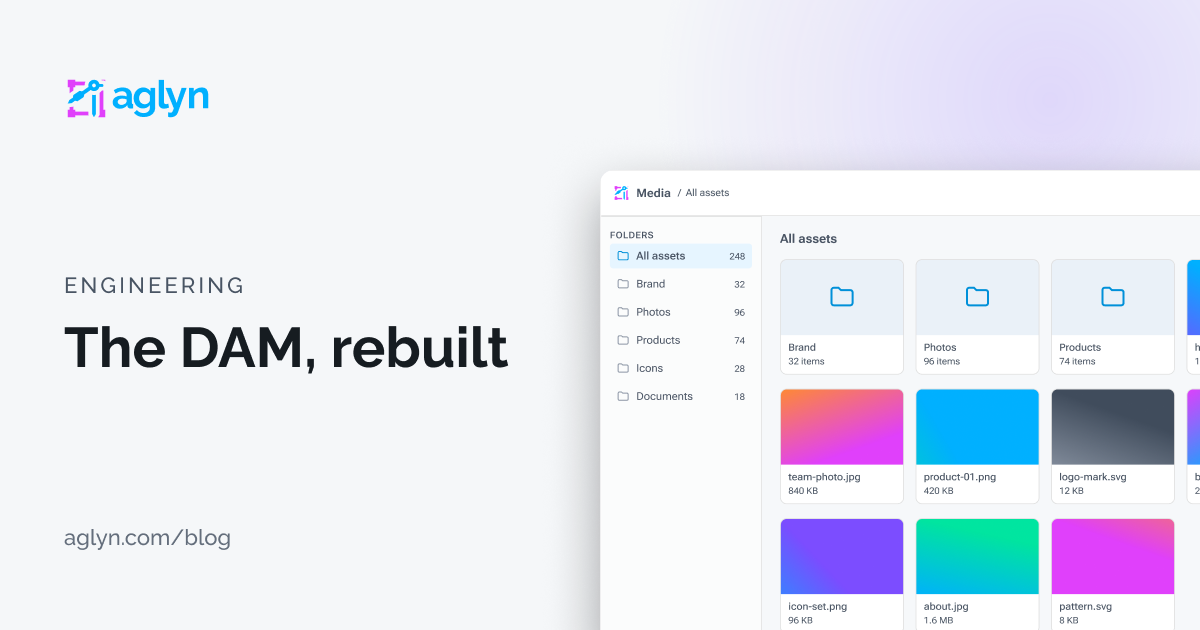
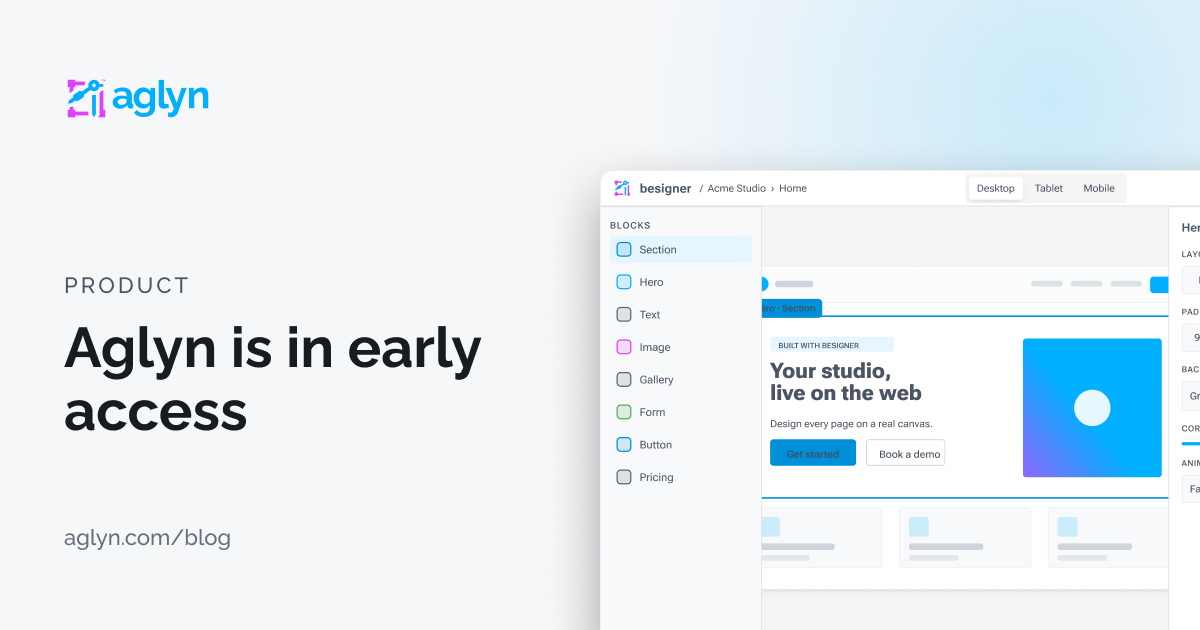
In Aglyn, commerce, forms and the inbox, the media library, workflows, and analytics aren't integrations — they're features of the same platform. A form submission can land in a dataset. A product page is designed in Besigner with your theme tokens. A workflow can react to any of it. Because everything shares one content model, the pieces compose instead of sync.
One console, many sites
Orgs, sites, roles, and billing live in a single console, so an agency or a team can run every property from one place — with isolation where it matters and shared assets where it helps.
The trade we chose
A platform this broad has to earn trust piece by piece, and that's the point of early access. But we'd rather deepen one coherent platform than ship another tool for your stack.
Share this article
Zach Gover is the founder and CEO of Aglyn. He spent eighteen years on both sides of the marketing–engineering handoff — building sites as a contractor, then running technical marketing at Caringo through its acquisition by DataCore and at DuploCloud from seed through Series B. The pattern never changed: the marketing site is a company’s most-visited product surface and the one the team can least afford to touch. Aglyn is his answer to that. He writes from Austin, and this site is built in the product it describes.